


When commercial print shops use a roll-to-roll UV DTF (ultraviolet direct-to-film) printer to produce high-margin luxury packaging emblems, textured signage decals, and metallic-look brand crests, the feature that justifies a premium unit price over ordinary vinyl stickers is the clear UV varnish layer: by controlling varnish pass counts and UV LED curing energy, operators can switch between a thin protective satin seal and a raised, tactile 3D embossing effect.
At the same time, laying down heavy multi-layer varnish directly alters carriage speed, ink consumption per linear metre, and film flexibility—making it essential for shop managers to match varnish thickness to the client’s budget and substrate geometry.
How Multi-Layer UV Ink Stacking Creates Tactile Embossing on Film
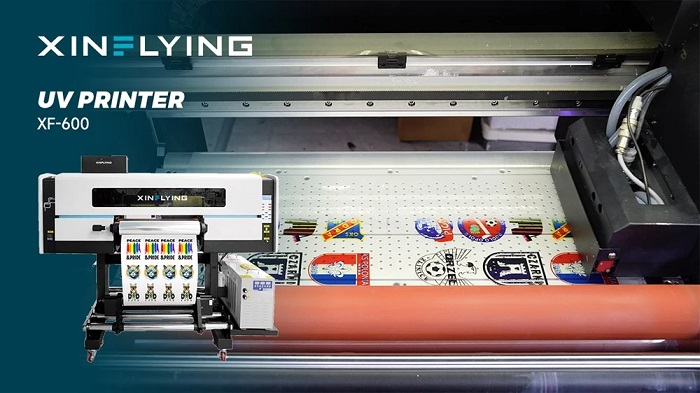
Unlike standard CMYK solvent or eco-solvent stickers that print a flat two-dimensional colour film, a commercial roll-to-roll UV DTF printer builds a three-dimensional polymer structure in a single continuous pass. Over the adhesive A-film base, the printheads jet a high-opacity white underbase (or multi-layer structural white buildup), apply the CMYK colour image, and finish with a dedicated clear UV varnish channel cured instantly by UV LED lamps.
Depending on how the operator configures the spot-varnish channel in the RIP software, that top clear coat serves three distinct commercial roles:
- Protective edge seal (standard single-layer varnish): A thin, uniform clear pass encapsulates the CMYK pigment layer, improving scratch resistance during squeegee application and helping the B-film carrier grip fine graphic edges evenly.
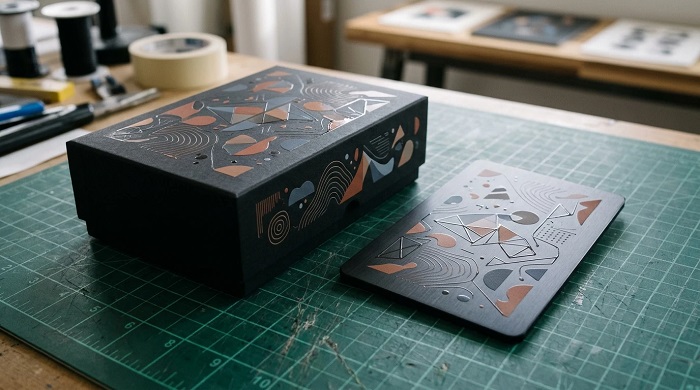
- Selective spot-gloss contrast: Applying high-gloss clear varnish only over specific brand initials, line borders, or water-droplet textures against a matte background creates striking visual depth on dark packaging boxes and indoor acrylic plaques.
- High-build tactile embossing (structural white + varnish buildup): Increasing white and varnish ink percentage in the RIP builds a raised, finger-feel relief profile ideal for flat luxury cosmetic boxes, spirits packaging, and commemorative plaques.
Balancing Varnish Build Thickness Against Print Speed and Substrate Curve
Adding extra varnish thickness is not free: higher ink volume slows down carriage pass frequency, consumes more clear UV ink, and makes the cured decal stiffer. Print shops should tier their UV DTF product offerings across three distinct varnish profiles.
| Varnish Profile Tier | RIP Layer Configuration | Tactile & Visual Result | Substrate Geometry Limit & Pricing Rule |
|---|---|---|---|
| Standard Flush Gloss | Standard white underbase + CMYK + light uniform varnish pass | Ultra-thin, conformable transfer with clean specular shine | Best for tight curves (small vials, pens, tapered drinkware) and cost-sensitive volume runs |
| Selective Spot Highlight | White underbase + CMYK + targeted spot-varnish mask on key vector elements | Contrast between satin ink areas and glossy raised accents | Ideal for mid-priced corporate gifts, smooth metal tins, and indoor wayfinding plaques |
| High-Build 3D Relief | High-density structural buildup + CMYK + heavy multi-pass varnish coat | Pronounced 3D tactile embossing that mimics custom moulded emblems | Restrict to flat or gently curved rigid surfaces (gift boxes, flat glass, plaques); charge a premium tier for extra ink and slower carriage passes |
Why Heavy Varnish Layers Crack on Tight Curves or If Over-Cured
One of the most frequent quality failures in new UV DTF installations occurs when an operator prints a thick, high-build 3D embossed emblem and tries to wrap it around a narrow cylindrical lip balm tube or a sharply curved bottleneck. Because cross-linked UV varnish becomes progressively more rigid as film thickness increases, bending a thick relief decal around a small radius stores elastic spring-back stress inside the polymer layer. Within twenty-four to forty-eight hours, the stiff edges of the emblem either crack or slowly pry themselves off the curved surface.
To keep raised varnish graphics flexible enough to survive B-film lamination and manual application, operators must also avoid UV LED over-curing. Setting UV lamp power to maximum on a slow high-pass embossing run bakes the clear varnish into a brittle shell before the sheet even reaches the laminating roller. Balancing lamp wattage so the varnish is fully cured yet retains slight mechanical toughness—and reserving heavy 3D builds for flat rigid boxes and plaques—prevents post-application edge lifting.
Selecting 60 cm Roll-to-Roll UV DTF Hardware for Dedicated Varnish Production
Producing smooth, bubble-free varnish finishes at commercial speeds requires dedicated printhead channels for white, colour, and clear varnish so the machine does not have to sacrifice throughput whenever spot gloss is enabled. Print shops evaluating 60 cm industrial platforms such as the XINFLYING XF-600 roll-to-roll UV DTF printer—or comparing four-head configurations like the XF-600S and XF-600st—can explore the complete XINFLYING UV DTF printer models catalogue to review printhead channel layouts and inline curing systems.
By pairing a multi-channel 60 cm roll-to-roll machine like the XINFLYING XF-600 with tiered varnish pricing and curvature rules, commercial print shops can sell high-margin 3D embossed packaging decals without risking delamination on curved merchandise.